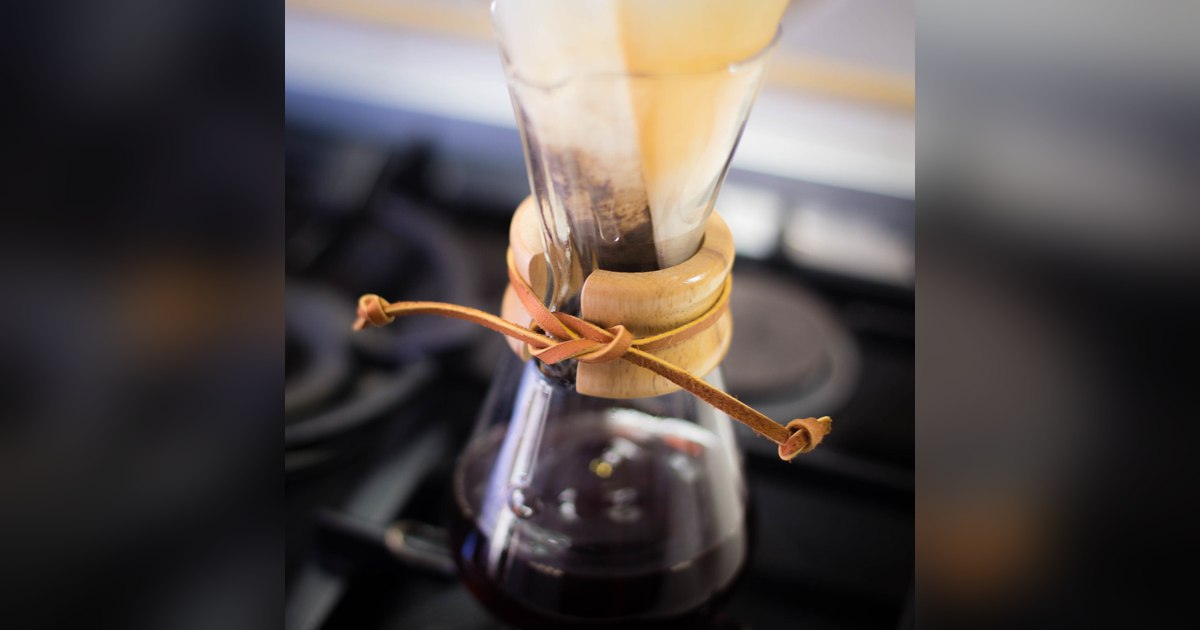
Image: Nicola since 1972 via Flickr (CC BY 2.0). For illustrative purposes only — not the exact product reviewed.
Pour-Over Troubleshooting: Why Your Coffee Tastes Bitter or Sour
Something is off. Maybe the cup is sharp and sour like biting into an unripe lemon. Maybe it's harsh, dry, and bitter like chewing on aspirin. Or maybe it just tastes flat and empty, like hot brown water with a vague memory of coffee. All three problems have specific, fixable causes. Here's how to diagnose what went wrong and correct it on your next brew.
The Extraction Spectrum
Every pour-over problem traces back to extraction: how much flavour your water dissolved from the ground coffee. Think of extraction as a spectrum with three zones:
- Under-extracted: Not enough flavour dissolved. The water didn't work hard enough. Taste: sour, sharp, thin, salty, tea-like.
- Well-extracted: The sweet spot. Sugars, acids, and oils are in balance. Taste: sweet, clean, complex, satisfying.
- Over-extracted: Too much dissolved. The water dragged out bitter, astringent compounds hiding deep in the coffee cells. Taste: bitter, dry, harsh, ashy, lingering unpleasant aftertaste.
Your job is simple: figure out which side of the sweet spot you're on, then nudge the next brew back toward the middle.
Problem: Coffee Tastes Sour or Sharp
Diagnosis: Under-extraction. The water passed through too quickly or didn't have enough energy to dissolve the sweet, balancing compounds.
Common causes and fixes:
- Grind too coarse. Coarse particles have less surface area and the water rushes past them. Grind 1 to 2 clicks finer on your grinder.
- Water too cool. Below 88 °C, extraction slows dramatically. Check your kettle temperature. If you don't have a thermometer, use water straight off the boil rather than letting it cool for too long.
- Brew time too short. If total drain time is under 2 minutes for a single cup, the water didn't have enough contact time. Grinding finer will fix this automatically by slowing the flow.
- Not enough coffee. A weak ratio (1:18 or higher) dilutes whatever extraction does happen. Increase to 1:15 or 1:16 and see if the body improves.
- Channelling. Water finding paths of least resistance through the bed, extracting those channels heavily while leaving the rest untouched. Improve your pouring technique: slow, even circles covering the entire bed. A gooseneck spout is essential here.
Problem: Coffee Tastes Bitter or Harsh
Diagnosis: Over-extraction. The water stayed in contact too long or worked too aggressively, dissolving unpleasant compounds from deep in the cell walls.
Common causes and fixes:
- Grind too fine. Ultra-fine grounds pack tightly, slow the drain to a crawl, and expose massive surface area. Go 1 to 2 clicks coarser.
- Water too hot. Above 96 °C, extraction becomes aggressive and pulls out woody, ashy flavours. Drop to 92 to 93 °C using a variable-temperature kettle like the Fellow Stagg EKG.
- Brew time too long. If your V60 is still dripping past 4 minutes, the grind is too fine or fines have clogged the filter. Check both.
- Stirring or swirling too aggressively. Some recipes call for a gentle swirl after the bloom. A violent stir breaks the bed apart, releases fines, and spikes extraction.
- Stale coffee. Beans past 6 to 8 weeks off roast have lost their volatile aromatics. What remains is mostly bitter, flat compounds. Fresh beans fix this.
Problem: Coffee Tastes Flat or Empty
Diagnosis: This can be either severe under-extraction or a quality issue with the beans themselves.
Common causes and fixes:
- Old, stale beans. The number one cause. If there's no roast date on the bag and it came from a supermarket shelf, the beans might be months old. Buy from a roaster with visible roast dates and use within 30 days.
- Pre-ground coffee. Ground coffee loses 60% of its aroma within 15 minutes of grinding. If you're using pre-ground, a hand grinder like the Timemore C2 Max for around $60 will transform your results overnight.
- Bad water. If your tap water tastes of chlorine or minerals, so will your coffee. Filtered water or bottled spring water with a TDS between 75 and 150 ppm gives much better results. Our water chemistry guide covers this in depth.
- Ratio too dilute. Try increasing your coffee dose by 1 to 2 grams while keeping the water volume the same. Sometimes flat coffee just needs more coffee.
The Quick Diagnostic Chart
| Symptom | Likely Cause | Fix |
|---|---|---|
| Sour, sharp, thin | Under-extraction | Grind finer, increase temperature, extend brew time |
| Bitter, dry, harsh | Over-extraction | Grind coarser, reduce temperature, speed up pour |
| Flat, watery, empty | Stale beans or weak ratio | Buy fresher beans, increase dose, grind fresh |
| Uneven (both sour and bitter) | Channelling | Level the bed, improve pour technique, check for fines |
| Muddy, over-thick, silty | Excess fines | Upgrade grinder, try a paper filter rinse, use the grinder guide |