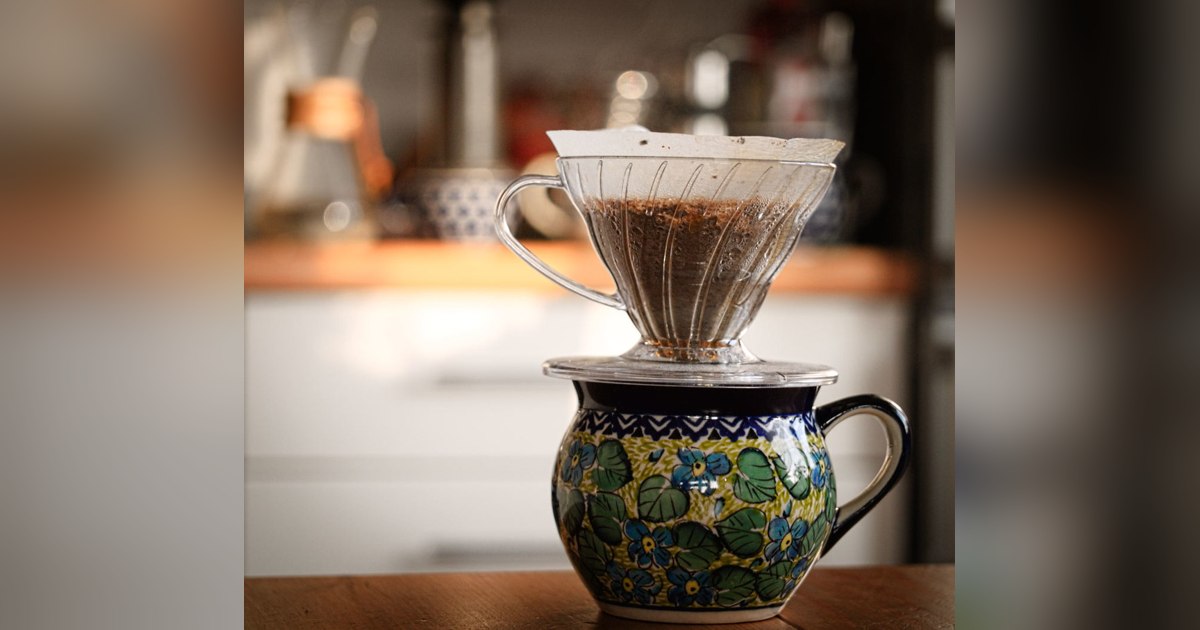
Image: Olgierd Pstrykotwórca via Flickr (CC BY 2.0). For illustrative purposes only — not the exact product reviewed.
Your First Pour-Over Setup for Under $100
Most "starter coffee kit" guides are upsell engines in disguise: eight pieces, half of them useless, all of them shipped before you know whether you even like the ritual. Here is the honest version. You need three things to make genuinely good pour-over coffee. A fourth makes it easier. Everything else can wait until you know what you actually want. The core three fit under $100 at typical prices, and nothing on this list is filler.
The Core Three
1. Dripper: Hario V60 02 in Plastic
The plastic V60 02 is the correct first dripper and it is not close. One piece, two-second rinse, nearly indestructible, and the 02 size brews one strong mug or two modest cups. Ceramic looks nicer and glass looks prettier still, but both chip and both cost more. Start here; upgrade later if the hobby sticks.
Why it earns its place: the V60's cone and large drain hole teach you more about extraction in a month than any forgiving brewer will. It is cheap enough to be disposable and good enough to never actually dispose of.
Noted limitation: it rewards technique more than immersion brewers do. Your first few cups will be inconsistent; that is the tuition, not a flaw.
2. Grinder: JavaPresse Manual Burr Grinder
Fresh-ground beans are the single biggest quality jump in home coffee, and the JavaPresse is the budget pick that actually uses burrs rather than blades, which is the only specification that matters at this price. It grinds fine enough for pour-over, fits in a cupboard, and needs no electricity. It is slower and less consistent than grinders three times its price — and it still beats pre-ground coffee every single morning.
Why it earns its place: pre-ground coffee is stale coffee. Any burr grinder beats no grinder, and this one leaves enough of the budget for good beans, which is where the flavor actually comes from.
Noted limitation: the adjustment mechanism uses click stops that take practice to repeat. If you later upgrade to a Timemore, the difference will be obvious — and worth it.
3. Filters: Hario V60 Paper, Size 02
One box of Hario V60 filters lasts months and removes the oils that make paper-brewed coffee taste clean. Give the filter a quick rinse with hot water before brewing to kill any papery taste. That is the whole ritual.
Why it earns its place: the cheapest possible upgrade path is running out of filters and quitting. A 200-count box removes that failure mode for half a year.
Noted limitation: none. It is paper. It works.
The One Upgrade Worth Stretching For
If the core three leave room in the budget, put the difference into the grinder before anything else. The Timemore C2 Max is where budget grinding stops feeling like a compromise: sharper burrs, a repeatable adjustment dial, and tool-free disassembly for cleaning. We put it head-to-head with the Kingrinder K6 in our comparison if you want the full picture.
Stretching the other way — a nicer dripper or a fancy server — buys you almost nothing at this stage. Grind consistency is the variable that moves the cup.
Kettle and Scale: Use What You Have First
Here is the part the kit guides leave out: your existing kettle is fine to start. Any kettle that boils water works. A gooseneck spout only buys you pour control, and you can learn to pour slowly from a regular spout in a weekend. When you are ready, the Hario Buono stovetop is the classic first gooseneck and works on any hob.
The same goes for a scale. A level tablespoon of medium-ground coffee is roughly 5 to 6 grams, and a standard mug is roughly 300 ml; that ratio gets you a decent cup while you learn. When consistency starts mattering to you, a scale with a built-in timer is the right next purchase — but on day one it is a want, not a need.
What You Can Safely Skip
- Electric kettles with temperature presets. Lovely, but water boils at 100°C and cools fast enough on its own. Learn with what you have.
- A dedicated server or carafe. Brew straight into your mug for the first month.
- Distribution tools, WDTs, dosing cups. Espresso tools with no meaningful pour-over benefit.
- The most expensive beans you can find. Buy fresh, medium-roast, locally roasted beans and spend the savings on more of them.
The Short Version
Buy the V60, the JavaPresse, and a box of filters, and use the kettle already in your kitchen. That is a complete, genuinely good pour-over setup under $100. When something about it starts to bother you — and something will, which is the fun part — that annoyance tells you exactly what to buy next. Start with our beginner's guide when the box arrives.