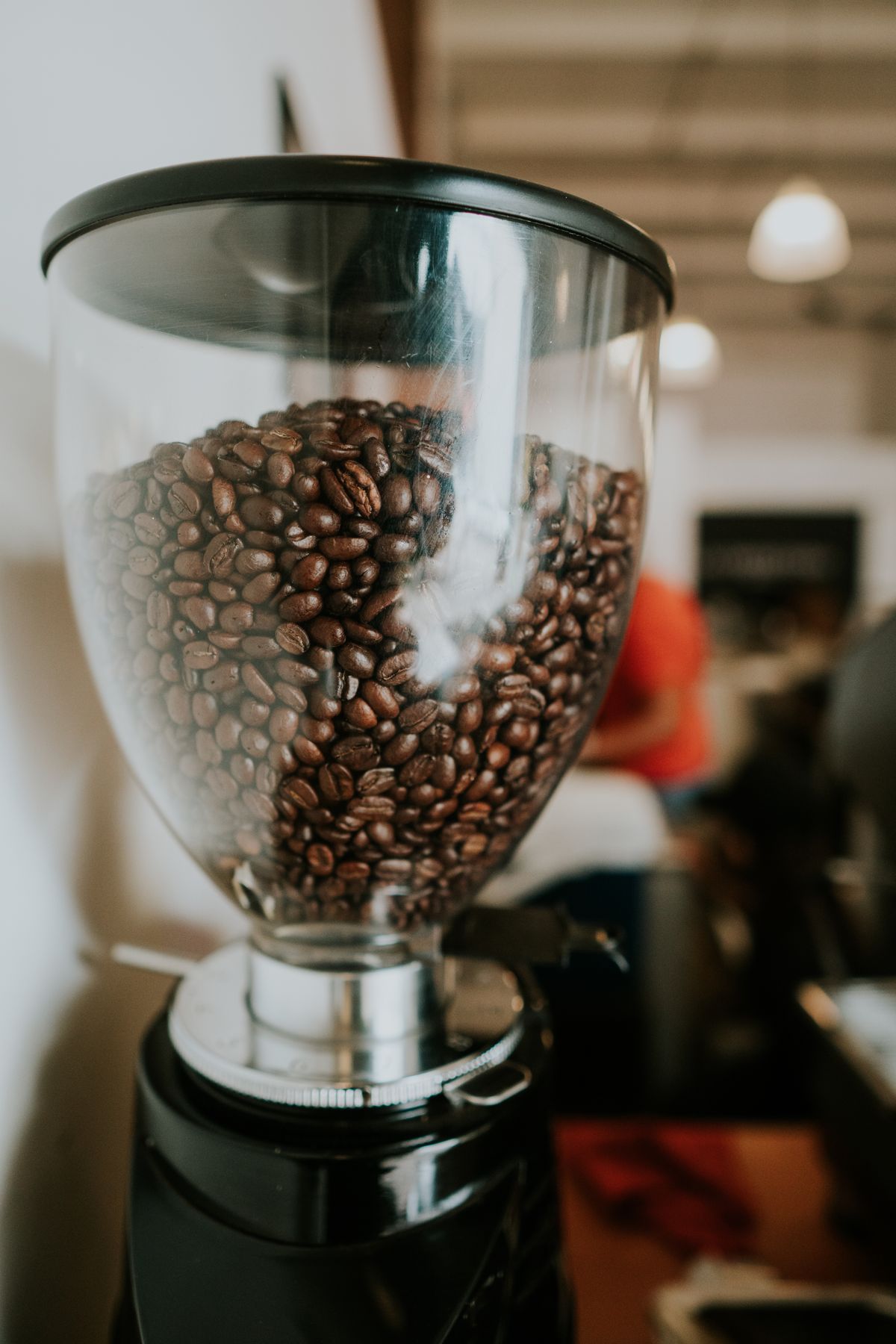
Image: Amar Preciado via Pexels. For illustrative purposes only, not the exact product reviewed.
Conical vs. Flat Burr Grinders: Is the Upgrade Worth It for Pour-Over?
Every coffee hobbyist meets the same fork in the road eventually. The grinder on the counter works, the coffee is decent, and yet the forums insist that flat burrs will change everything, or that conical burrs are the only sensible choice. This post is about what burr geometry actually changes in the cup, what an upgrade really buys, and when the honest answer is to keep the grinder you already own. The short version first: the conical versus flat difference is real but smaller than thread titles suggest, grind consistency at your target size matters more than the shape of the cutting surface, and the biggest jump available to most home brewers is not conical versus flat at all. It is pre-ground versus freshly ground.
What burr geometry actually changes
Start with what any burr grinder does. Two cutting surfaces sit a fixed distance apart, beans pass between them, and the gap sets the particle size. Everything else is detail, but the detail is exactly what the argument is about.
In a conical burr set, a cone-shaped inner burr spins inside a ring-shaped outer one. Beans fall through vertically under their own weight and are cut progressively along the length of the burrs. Research on particle size distributions suggests this tends to produce a bimodal grind: a main peak of particles near your target size plus a smaller secondary peak of very fine particles, called fines. Those fines pack the gaps between the larger particles, slow the flow of water through the bed, and push body and texture up. In the cup, conical grinds usually read rounder and heavier, and they are more forgiving. Pour a bit sloppily, run slightly coarse, miss your ratio by a gram, and the fines quietly smooth over the mistake.
In a flat burr set, two parallel ring-shaped burrs face each other. Beans are fed near the centre and cut as centrifugal force carries them outward across the burr faces. The dwell time is more even, so the particle distribution is narrower: closer to unimodal, one tight peak around your target size. With fewer fines holding water back, flow is faster and extraction lands more evenly across the particles. Flat burr cups are usually described as clearer, with flavour separation you can pick apart: this note here, that note there. The trade is that the cup is less forgiving of sloppy technique, because there are fewer fines to mask an uneven pour or a stale bag.
Those are tendencies, not laws. Burrs differ in diameter, material, coating, and rotational speed, and some designs add pre-breakers that shift the distribution before the main burrs ever touch the bean. A large slow-turning flat burr set and a small fast one do not produce the same grind, and the same goes for conicals. Nothing here has been bench-tested by us; this is desk research and widely reported experience. Treat burr geometry as a character note about a grinder, never as a verdict on the cup.
The honest part: smaller than the forums claim
Here is the part the arguments leave out. Once grind size is dialled in for the same recipe, blind tasting often struggles to separate the two camps, and the difference within each camp is frequently larger than the difference between them. What actually predicts a good pour-over is consistency at your target size. If a large share of your particles are boulders, they under-extract and taste sour and thin. If your grinder throws a spike of fines, they over-extract, clog the filter, and drag the cup toward bitterness. A conical grinder that lands tightly around your target beats a flat burr grinder that wanders, and the reverse is just as true.
That is the honest headline of this whole debate: buy consistency, not geometry. What consistency changes is concrete. Sweetness arrives earlier in the dialling-in process. The sour-and-bitter contradiction in the same cup, which is really under-extraction and over-extraction happening side by side, fades away. Drain time stops lurching between brews. If you have not yet found the right target size for your recipe, our grind size guide walks through that first, because a grinder upgrade cannot rescue a wrong target.
Two quiet variables sit underneath the geometry debate: burr alignment and burr sharpness. A well-aligned budget set beats a poorly aligned premium one, and worn burrs of either type produce more fines and more spread than the conical-versus-flat argument ever accounts for. If your grinder is several years old and the grind has slowly drifted, fresh burrs of the same geometry may be the real upgrade. The models we track are gathered on our coffee grinder page if you want to browse the field before deciding.
What an upgrade actually buys
Set geometry aside for a moment. Moving up in grinders buys you five concrete things, and they matter in this order for pour-over:
- Consistency. Fewer boulders and fewer excess fines at filter sizes. This is the prize, and it is the only one you can taste in every single cup.
- Adjustment granularity. More usable steps in the filter range, or a stepless collar. For pour-over you only need a handful of repeatable settings around your target; espresso demands far finer control, so do not pay for adjustment range you will never use.
- Retention. Coffee left in the chute is stale coffee in tomorrow's cup. Low-retention and single-dose designs keep things honest, and they matter most if you rotate beans often or keep a couple of bags fresh in rotation with careful bean storage.
- Noise and speed. An electric grinds a 20 g (0.7 oz) dose in under half a minute at a moderate hum. A hand grinder takes roughly 30 to 60 seconds of arm work for the same dose and stays almost silent.
- Workflow. Dosing cups, anti-static treatment, magnetic catch cups, clean chutes. Nice to live with, not transformative in the cup.
What an upgrade does not buy is worth stating plainly: better beans, better water, and better pouring. A grinder multiplies what your technique and your coffee already provide. If those inputs are weak, the multiplier works against you.
Two quick home tests tell you whether the grinder is actually the bottleneck. First, the plate test: spread a pinch of grounds on a white plate under good light and look at the spread between the largest and smallest particles, compared against the photos in the grind size guide at the setting you brew at. Second, the retention test: weigh your beans before grinding and the grounds after. The difference is what stayed inside the machine, and if it is more than roughly half a gram on a 20 g (0.7 oz) dose, yesterday's stale coffee is joining today's brew. Neither test is lab-grade, but both tell you more about your grinder than its burr shape does.
Manual versus electric: where the value sits
The uncomfortable truth for electric grinder makers is that hand grinders give the best grind quality per dollar, and it is not close. With no motor, gearbox, or electronics to pay for, nearly all of the money goes into the burrs and the burr carrier. If you brew one or two cups at a time and a minute of cranking does not bother you, hand grinding competes with electrics costing several times more. The costs are real though: physical effort, small batch capacity, and a morning routine that does not scale to serving a table of guests.
The TIMEMORE Chestnut C3 ESP Pro Hand Coffee Grinder sits at about $99.00, and the naming tells you what it is: a hand grinder with an adjustment range positioned to stretch from filter coffee toward espresso, which is what the ESP suffix tends to signal in Timemore's line. If you only brew pour-over, that extra range is headroom rather than a daily tool, but it means one grinder can follow you into a lever or a cafetiere later. The KINGrinder K6 Manual Coffee Grinder lands at about $109.00 and earns its keep on workflow: the external adjustment ring means you can change brew method without taking the catch cup off, which matters if you jump between filter and immersion styles through the week. For a first grinder at this level, our first setup guide covers how the grinder slot fits into a whole kit without overspending.
Either hand grinder will out-grind its price tag in the cup. Choose between them on ergonomics and adjustment style rather than on geometry, because at this level build quality and burr sharpness dominate whatever conical-versus-flat story the marketing tells.
Electric grinders worth the counter space
If cranking is a non-starter, the electric tier breaks into three sensible bands. The OXO Brew Conical Burr Electric Coffee Grinder is about $98.98, which is hand grinder money for a push-button machine. It is a conical burr design, and at this price the honest framing is that you are trading ceiling for convenience: one-touch grinding for a daily filter habit, without pretending it competes with flat burr clarity.
The Baratza Encore ESP Coffee Grinder is about $199.95 and is the workhorse recommendation you will see across the hobby. The ESP suffix again signals an adjustment range that reaches toward espresso rather than stopping at filter. It is the pick when you want a grinder that covers pour-over now and a moka pot or entry espresso later without buying twice.
Now the flat burr tier. The Fellow Ode Gen 2 Electric Coffee Grinder (64mm flat burr) is about $399.95. The name gives you the key spec: 64 mm flat burrs, in a grinder positioned for filter brewing rather than espresso. This is where the flat burr character, cleaner flavour separation, faster flow, less forgiveness, becomes something you actually pay for, alongside a quieter, tidier single-dosing workflow. The Turin DF64 Gen 2 Single Dose Coffee Grinder (64mm flat burr) is the one we will not put a number on: its price is often hidden under MAP pricing on the listing, so check the live price. On paper it is the do-everything shape of grinder: 64 mm flat burrs and a single-dose workflow, with a range wide enough that filter clarity and espresso duty can share one chassis.
Gear checklist
Technique first, metal second. Tick these in order before any upgrade money moves:
- Scale, timer, and a repeatable pour already in place. No grinder fixes a wandering recipe.
- Fresh beans within a month of roast, stored well. The grinder cannot recover aromatics that oxygen already took.
- One or two cups a day and you value the cup over the cranking: TIMEMORE Chestnut C3 ESP Pro Hand Coffee Grinder.
- You switch brew methods often and want instant adjustment: KINGrinder K6 Manual Coffee Grinder.
- Push-button mornings, filter coffee only, tight budget: OXO Brew Conical Burr Electric Coffee Grinder.
- One electric that stretches from filter into espresso range: Baratza Encore ESP Coffee Grinder.
- Clarity-first filter coffee with a single-dose habit: Fellow Ode Gen 2 Electric Coffee Grinder (64mm flat burr).
- Flat burr clarity plus espresso range in one grinder: Turin DF64 Gen 2 Single Dose Coffee Grinder (64mm flat burr).
When the upgrade is not worth it
Sometimes the honest answer is to keep your money. The grinder is only worth upgrading when it is the bottleneck, and it is frequently not.
- Your technique is the weak link. If blooms are guesswork, pours are uneven, and ratios live in your head, a new grinder reproduces the inconsistency at a higher price point. Walk through the beginner's pour-over guide first and get the ritual repeatable.
- Your beans are the weak link. Supermarket bags without roast dates, or bags that have sat open for two months, taste flat no matter how uniform the particles are. Sort the beans before the burrs.
- Your grind is already consistent. If a pinch of grounds spread on a plate shows a tight cluster around your target with few boulders and few fines, your grinder is doing its job. Spend the money on water or a new roaster instead.
- You brew big volumes or drink with milk. The clarity differences between geometries show up most in a neat, single-origin cup. In a full carafe or a milky mug, they get buried.
- Your current grinder is a blade mill. Then any burr grinder is the upgrade, and conical versus flat is a conversation for later. The first setup guide shows where the grinder slot fits in a full kit on a small budget.
Verdicts by brewer type and budget
Enough hedging. Here is how we would actually decide, brewer by brewer and band by band.
Single-cup V60, light roasts, clarity is the goal: go flat burr and single dose. This is the one place the geometry argument has real purchase, because the narrower distribution is exactly what a delicate washed light roast rewards. The Fellow Ode Gen 2 is the tidy filter-focused answer; the DF64 makes sense if you also want espresso range in the same grinder.
Everyday pour-over, medium roasts, you like a rounder cup: stay conical and do not spend flat burr money. An OXO for push-button ease or the Encore ESP if you want room to grow will serve this habit for years, and a good hand grinder serves it just as well for one or two cups.
Several brew methods, from V60 to moka to occasional espresso: buy adjustment range and a wide working band. The K6 handles this by hand; the Encore ESP handles it electrically; the DF64 handles it if the budget stretches to the flat burr tier.
Small kitchen, one cup each morning, budget is real: a hand grinder is the correct answer and it is not a compromise. Put the saved money into beans.
By budget band: at hand grinder money you get the best grind quality per dollar and you pay in arm work. In the entry electric band you buy convenience and keep conical character. At the flat burr tier you pay for clarity, workflow, and build, and the DF64 is where that tier overlaps with espresso ambitions. Above that you are paying for refinement, not for a different drink.